

good creature Laurin Becker Macios on her YA novel in verse CALLING ME HOME
on turning to fiction during naptimes, escaping to an Airbnb for bursts of generative writing, and realizing that "while writing can wait, mothering can't"

Hello there! Welcome to Be Less Careful. This is a good creatures interview, a series that explores the intersection of caregiving and creative practice. If you know (or are!) a good creature whose work we should feature, send me an email—you can just reply to this newsletter.

☀️🏫 Summer School 🏫☀️
a friendly note before we dive in—there are three more sessions of Summer School coming up, and they’re going to be great!
🌞 @samanthapaigerosen, editor of the forthcoming Living, Together on how to DIY the heck out of your marketing and publicity without actually killing yourself in the process (“You should take the shots, but also stop short of complete exhaustion,” she says)—Thursday, July 9 at noon eastern
🌞 Erica Stern, author of Frontier: A Memoir & A Ghost Story, on bending genre in memoir—Thursday, July 16 at noon eastern
🌞 Starr Davis (@writer.mama), author of Affadavit, on writing erasure and working in a series—Thursday, July 30 at noon eastern
You can find all the info about the series here—and paid subscribers will get access to the recordings plus bonus resources from guests including Emily Rapp Black, Gemma Hartley, Heather Bowlan of PHL Poetry LFG!!!!, and Cassie Mannes Murray of Pine State Publicity

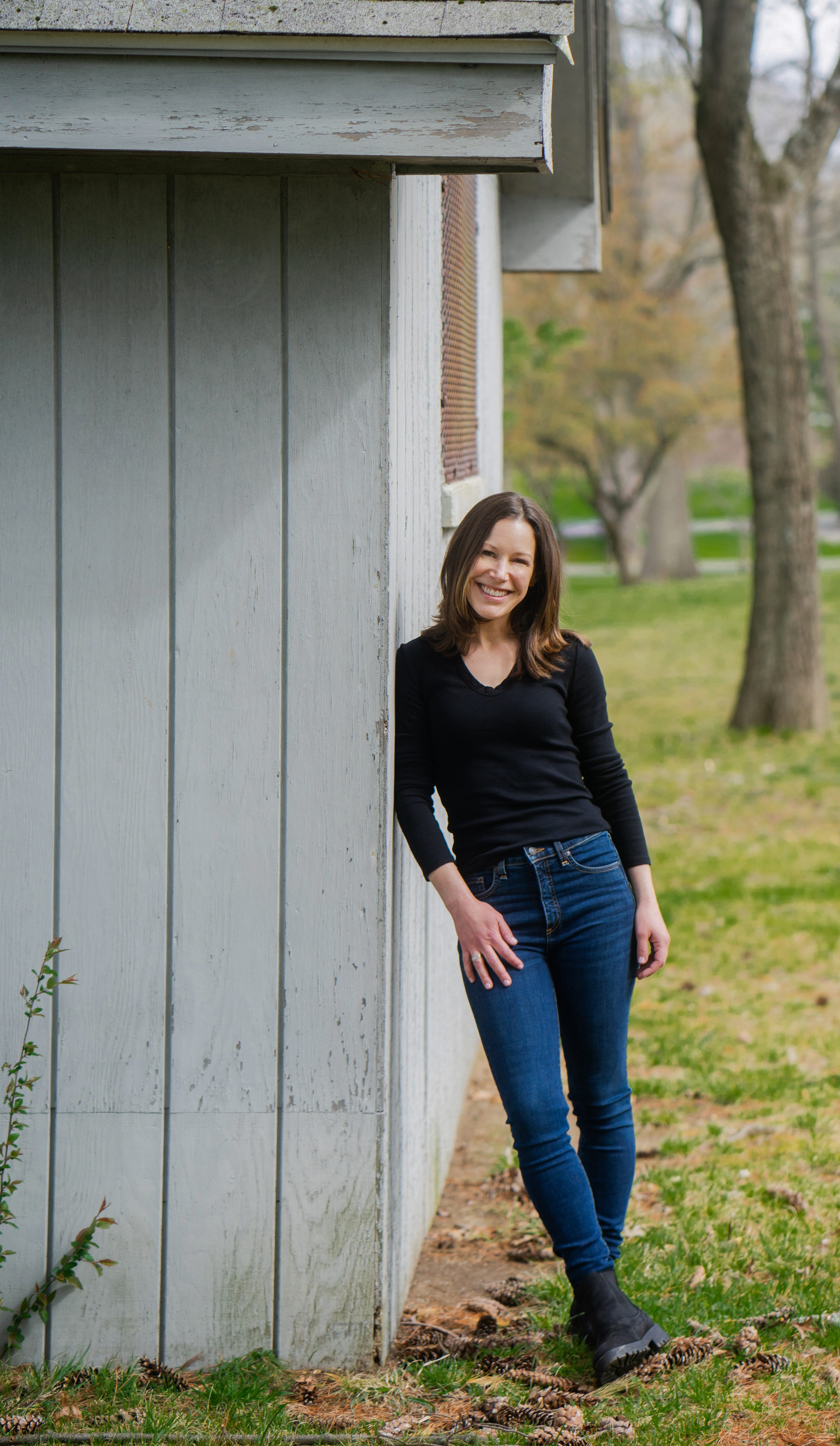
Today’s interview is with Laurin Becker Macios, whose YA novel in verse Calling Me Home1 is out now. The book follows Jenny Campbell, a recent high school graduate, on a solo backpacking trip through Europe that diverges from her plans; when she returns home at the end, she’s pregnant and chooses to end her pregnancy. I’m impressed by a book that can take in both the classic travel narrative and big questions about abortion and what happens when your carefully-planned future doesn’t quite fit anymore. Below, we talk about how Laurin turned from poetry to fiction after the birth of her first son, the different rhythms of revision and drafting, and learning that “caregiving is beautiful work, too.”
Who do you care for?
I care for my two elementary-age sons and a 10-year old French Bulldog.
What kind of creative work do you do?
I’m a writer, namely of poetry and fiction—sometimes separately and sometimes blended into verse novel form, like in my recent verse novel Calling Me Home.

What’s changed in your creative life since becoming a caregiver?
My writing completely changed since becoming a caregiver. Before having my kids, I wrote only poetry and only non-narrative poetry. After having my first kid, I had to pivot. When he was very young and napping a few times per day, I would use one of those naps to write—but it felt like so much pressure to have to find inspiration for a poem, draft the poem, and then never know if anything would come of it. I decided to try fiction so that I could sit down and pick up where I left off. I started with children’s books just to practice narrative arc, and worked my way into my verse novel. Once I wrote the verse novel, I started playing with prose. It’s been so much fun and such a gift that I wouldn’t have thought to give myself if it weren’t for having kids.
❤️️ if you love these interviews, tapping the little heart at the top or bottom of the post is a great way to help other good creatures find us! ❤️️
Is there someone who inspires you that both fosters a creative practice and is a care-giver?
I’m really inspired by Megan Marshall, the Pulitzer-winning biographer and memoirist. I recently heard her talk about how The Peabody Sisters, her first big biography, took her 20 years to write because she was busy raising her children. And she spoke of that so lovingly, both toward them and toward herself. She said she chose to focus most of her time on her living loved ones, and so her writing schedule just had to fit in as it could. I find it so validating and comforting, because the bulk of my time is spent with my kids (or doing things for them behind the scenes while they’re at school), and of course I watch a lot of other people churn out beautiful work. But caregiving is beautiful work too, and while writing can wait, mothering can’t. I’m so grateful to be able to spend my time with and for them, and seeing how Megan Marshall’s full and rewarding writing life could happen at her own pace—slowly, until the kids were off at college—lets me know that the same can be true for me if it needs to be.
What do you do to help activate the switch (if it is a switch) between creative-brain and care-giving brain? (Is it possible to switch?)
I find it really difficult to switch between the two. In fact, I often can’t. When I was writing Calling Me Home, I spent one long immersive weekend per season an hour from home at an Airbnb where I did nothing but write. I’d go on a Friday afternoon, decompress, then write all day and night Saturday and Sunday and frantically Monday morning till it was time to drive back home. Between those sessions, I’d revise—revision is easier for me to dip into in small doses, but real generative work requires me to be able to leave myself behind.
Laurin Becker Macios is the author of the Young Adult verse novel Calling Me Home (Holiday House, May 2026), named a Junior Library Guild Gold Standard Selection, and Somewhere to Go, winner of the 19th annual poetry award from Elixir Press. Her work has appeared in Gulf Stream Magazine, [PANK], and elsewhere, and is currently nominated for Best of the Net 2026. Host of The Writer’s Bio(luminescent) Podcast, she is the former Executive Director of Mass Poetry and former Program Director of the Poetry Society of America. She earned her MFA in Creative Writing Poetry from the University of New Hampshire, where she taught on fellowship. She lives in Connecticut. You can find her on IG at @laurinbeckermacios and online at laurinbeckermacios.com.

🌟 novelist Christina Consolino, on making sure your family sees your joy in your creative work

🌟 writer Unclenching by Chris L Vaughan, on how becoming a parent sparked a change in his writing life and the need to “tell my own story”

🌟 BOYMOM author Ruth Whippman, on how the “weirdly freeing” “loss of selfhood” she experienced in motherhood helped her become a writer


If this newsletter has helped you in your creative life, you can support me by becoming a paid subscriber or by ordering my new book, The Good Mother Myth.

If you buy books through the Write More bookshop, I’ll get a tiny commission, which would be very nice of you. (I have great recs and excellent taste ;). ) But what’s even better is buying the book at your local bookstore or requesting your library buy it!
Love this!